



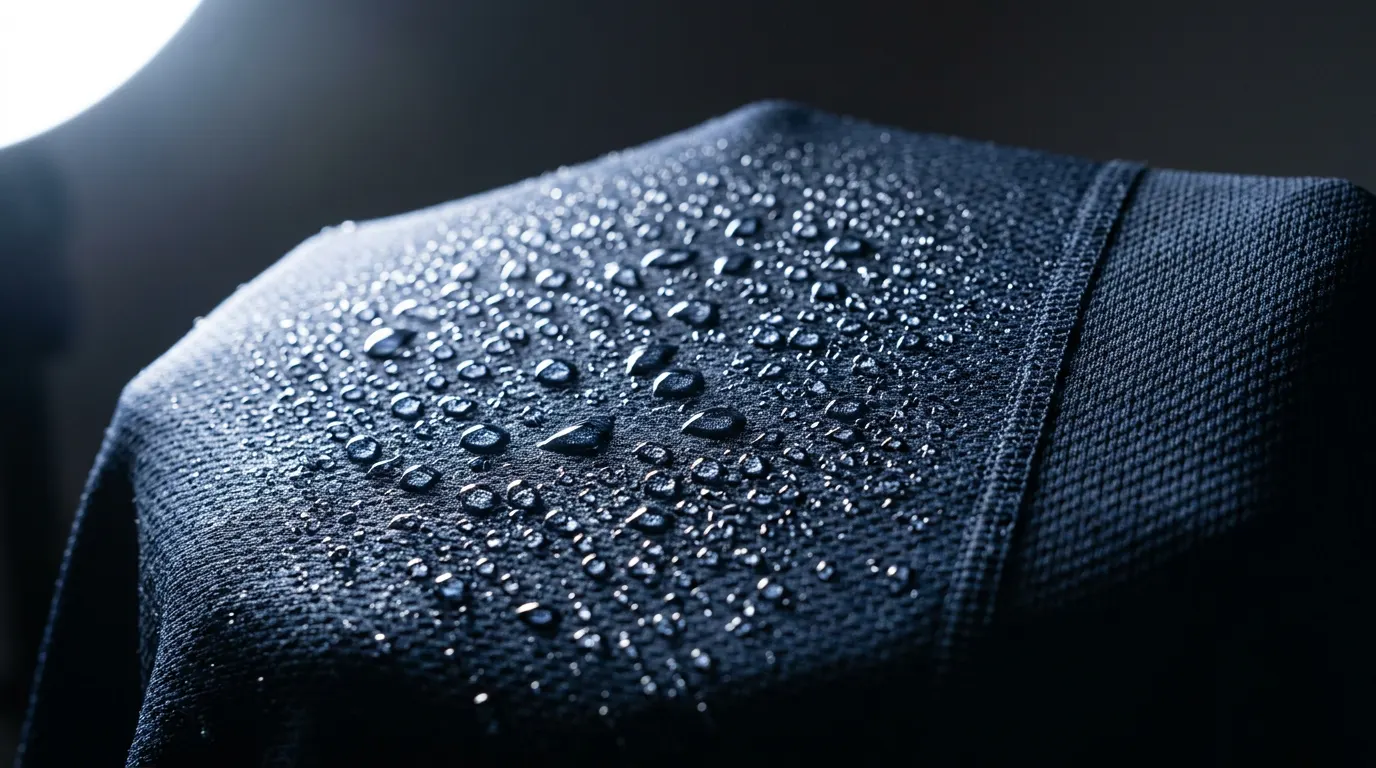
When you exercise, sweating is a natural response that helps your body regulate its temperature. However, sweat that builds up inside your clothes can make physical activity uncomfortable. A wet shirt can cling to your skin, feel heavier and take a long time to dry.
This is where moisture-wicking fabric comes in.
Widely used in sportswear, moisture-wicking fabric is designed to move liquid sweat away from the skin and distribute it across the fabric’s surface, helping it evaporate. This can leave the skin feeling drier and improve comfort during physical activity.
But what actually makes a fabric moisture-wicking? Is it simply a matter of the raw material, or does the way the fabric is manufactured matter too?
Understanding this technology can help you make better choices when buying sportswear.
1. What Does Moisture-Wicking Mean?
The term moisture-wicking describes a fabric’s ability to transport liquid moisture, such as sweat, through its structure and away from the skin.
Rather than allowing sweat to build up in one area, moisture-wicking fabric helps distribute the liquid across its surface, making it easier for the moisture to evaporate into the surrounding air.
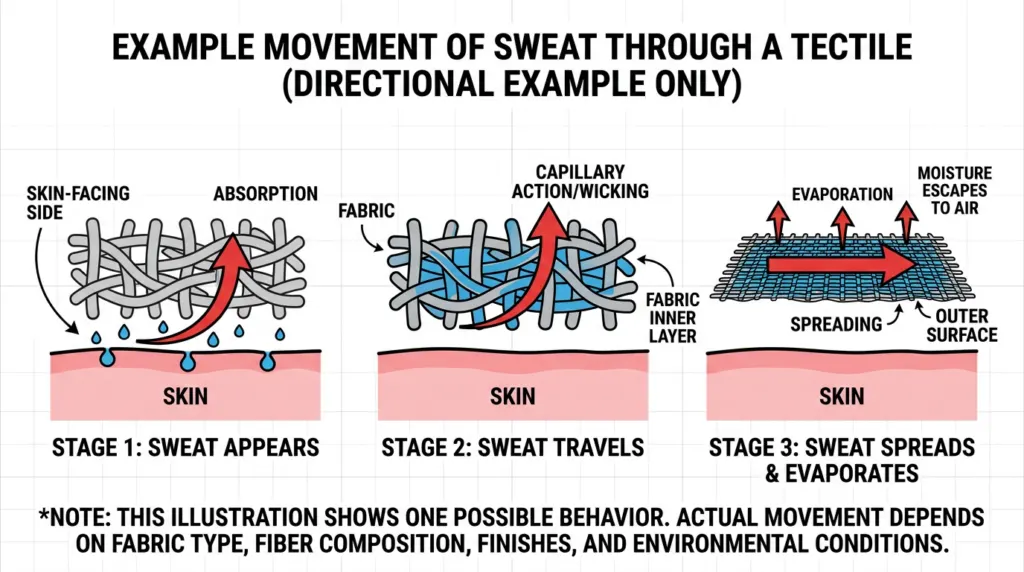
The process involves three main stages:
- Wetting: Liquid sweat comes into contact with the fabric and spreads across its surface or into the spaces between fibres.
- Moisture transport: Capillary action moves the liquid through the tiny channels formed by fibres and yarns.
- Evaporation: Moisture exposed to the air evaporates, helping the garment dry.
These processes work together to manage sweat during physical activity.
One important distinction: wicking does not necessarily mean that the fibres absorb sweat. Liquid can travel through the spaces between fibres and yarns without being absorbed into the fibre material itself.
Moisture-wicking fabric also does not prevent sweating or absorb unlimited amounts of moisture. Its purpose is to transport liquid and help it evaporate.
2. How Does Moisture-Wicking Technology Work?
The science behind these fabrics is largely based on a physical process called capillary action.
Capillary action allows liquids to move through narrow spaces without the need for external pumps. In textiles, these spaces are formed by the fibres, yarns and overall fabric structure.
When sweat reaches a suitable textile surface, it can spread through these tiny channels and move from one part of the fabric to another.
The direction and speed of this movement depend on how the textile is designed. Some fabrics transport moisture in multiple directions, while specialised constructions can guide liquid from the side in contact with the skin towards the outer layer.
Three factors have a particularly important influence on this process.
Fibre Structure
The shape and surface characteristics of individual fibres influence how moisture moves through a fabric.
Some synthetic fibres are manufactured with specially designed cross-sections, grooves or channels. These features create additional pathways for liquid movement and help distribute moisture throughout the textile.
Microfibres, which have a much smaller diameter than conventional fibres, also create numerous narrow spaces that encourage capillary action. However, finer fibres do not automatically guarantee better moisture management — their arrangement within the fabric matters too.
Fabric Construction
The way fibres are organised into yarns and fabrics plays a fundamental role.
Knitted and woven fabrics have different structures, which affect porosity, air permeability and moisture transport. Some sports textiles use multiple layers with different moisture-related properties: the inner surface is designed to collect liquid from the skin, while the outer surface helps spread it and promote evaporation.
This is particularly useful in technical base layers and performance garments, where controlling moisture movement through the clothing is an important part of comfort.
Specialised Finishes
Manufacturers can also apply chemical or functional treatments to change how a fabric interacts with water.
Hydrophilic treatments, for example, improve a textile surface’s ability to become wet and distribute liquid moisture. These finishes are particularly useful on synthetic fibres that naturally absorb very little water.
The effectiveness of a finish depends on its formulation and application. Some treatments may also lose effectiveness after repeated washing, which is why following garment care instructions matters.
3. Which Materials Are Used in Moisture-Wicking Sportswear?
Not all fabrics manage moisture in the same way. Some fibres naturally absorb more water, while others absorb very little but can be engineered to transport liquid through their structure.
Several materials are commonly used in sportswear.
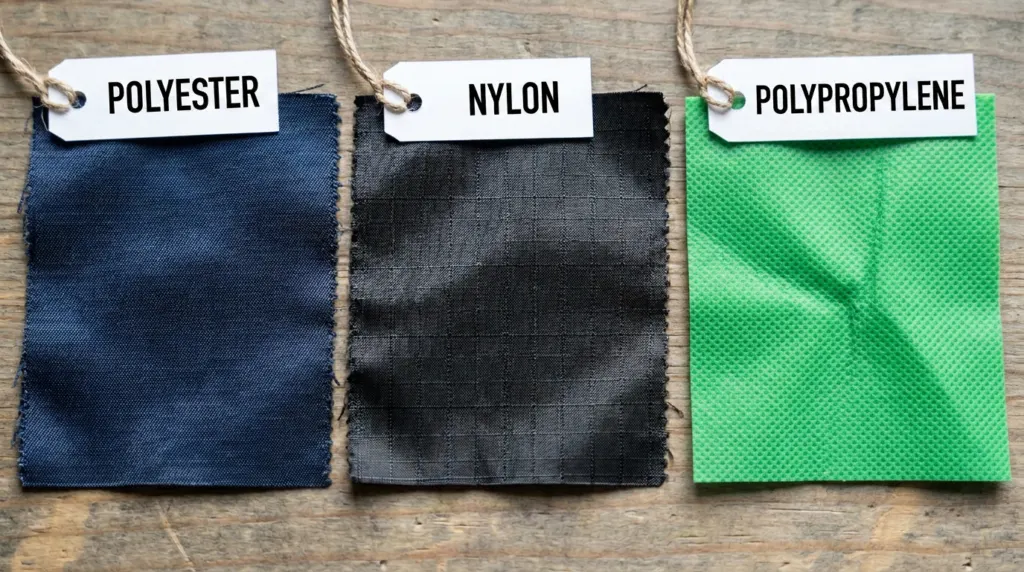
Polyester
Polyester is one of the most widely used synthetic fibres in sportswear.
It absorbs relatively little moisture compared with cotton, reducing the amount of water retained within the fibre itself. Its performance can be further improved through specialised fibre shapes, yarn constructions and moisture-management finishes.
Polyester is commonly used in running shirts, football jerseys, training tops and other garments designed for regular physical activity — such as the Shift Men’s T-Shirt, made from polyester and elastane.
Its low moisture absorption and availability in engineered textile constructions make it a particularly practical choice for performance clothing. However, ordinary polyester is not automatically moisture-wicking.
Nylon (Polyamide)
Nylon, also known as polyamide, is another synthetic fibre used in technical sportswear.
It is valued for its strength, abrasion resistance and flexibility. Like polyester, nylon can be manufactured into fabrics that manage moisture — as in the Shift Women’s Leggings, made from polyamide and elastane.
Nylon is commonly found in sports leggings, fitted training garments and outdoor clothing, where durability and comfort are important.
Polypropylene
Polypropylene absorbs very little moisture and is used in some technical base layers and performance garments.
Because it tends to retain very little water within the fibre, it helps keep the fabric lightweight when exposed to sweat. Its low absorbency makes it useful in specialised sportswear applications, particularly in garments worn directly against the skin.
Blended Fabrics
Manufacturers also combine different fibres to achieve a balance of properties.
For example, polyester can be blended with elastane to provide stretch and shape retention. Other combinations may be designed to improve softness, comfort or moisture management.
The advantage of a blend is that it can combine characteristics that a single fibre may not provide on its own.
4. Moisture-Wicking vs. Quick-Drying: Are They the Same?
The terms moisture-wicking and quick-drying are often used together, but they describe different properties.
Moisture-wicking refers to the movement of liquid sweat through a fabric, helping transport it away from the skin.
Quick-drying refers to how quickly moisture retained by the fabric evaporates and the garment becomes dry again.
A fabric can transport sweat effectively but still take time to dry if it retains a significant amount of moisture or is exposed to conditions that slow evaporation.
Likewise, a fabric that absorbs very little water may dry quickly without necessarily transporting sweat away from the skin effectively.
Several factors influence drying performance:
- Airflow: Moving air helps moisture evaporate from the fabric.
- Environmental humidity: Air that already contains a high level of moisture slows evaporation.
- Fabric thickness: Thicker and heavier fabrics may take longer to dry.
- Available surface area: Spreading moisture across a larger area helps promote evaporation.
- Surface characteristics: Fabric texture and wetting properties influence how moisture spreads and evaporates.
A well-designed sports fabric aims to combine effective moisture transport with suitable drying performance. Both properties contribute to comfort, but one does not replace the other.
5. Moisture-Wicking Fabric vs. Cotton: Which Is Better for Exercise?
Cotton is valued for its softness and everyday comfort. However, the way it handles moisture makes it less suitable for some high-intensity activities.
Cotton fibres are naturally hydrophilic: they attract and absorb water. When a cotton shirt becomes saturated with sweat, it can retain considerable moisture, become heavier and take longer to dry.
Technical synthetic fabrics, particularly those made from polyester, generally absorb less moisture into their fibres and can transport liquid more effectively through their structure. This makes them a popular choice for activities involving prolonged or intense effort — a topic we also explored in our comparison of polyester vs. cotton socks.
Research comparing natural, synthetic and blended fabrics for activewear has also found that the synthetic fabrics tested generally dried faster than the natural ones. This supports their practical advantages in many sportswear applications, although the results should not be treated as a guarantee for every garment.
| Feature | Cotton | Technical Synthetic Sports Fabric |
|---|---|---|
| Moisture absorption | Relatively high | Generally lower |
| Sweat transport | Often limited in ordinary fabrics | Can be highly effective |
| Drying speed | Often slower when saturated | Often faster |
| Weight when wet | Can increase considerably | Generally retains less water |
| Everyday comfort | Soft and familiar | Depends on fibre and construction |
| High-intensity training | Can become uncomfortable when wet | Generally more suitable |
This does not mean cotton is unsuitable for every type of physical activity. For light exercise, leisure activities or situations where softness is the priority, cotton remains a comfortable option.
For demanding workouts, however, a properly engineered moisture-management fabric generally offers greater practical advantages.
6. Why Does Moisture Management Matter in Different Sports?
The importance of moisture management depends on the type, intensity and duration of physical activity.
Running
During running, the body produces sweat to regulate its temperature. A lightweight shirt that transports moisture through the fabric and dries efficiently helps reduce the discomfort caused by wet clothing.
Breathability and fit also matter, particularly during longer sessions.
Gym and Strength Training
Weightlifting, circuit training and high-intensity sessions can involve considerable sweating.
Moisture-wicking shirts and tops help manage sweat during repeated exercises. Stretch, fit and freedom of movement are just as important when choosing training clothes.
Football and Team Sports
Football and other team sports involve continuous movement, changes in intensity and different environmental conditions.
Technical jerseys are commonly made from synthetic fabrics designed to balance moisture transport, breathability, durability and lightweight performance.
The fabric must also withstand repeated washing and regular use. For personalised team kits, discover how the DOMINER design process works.
Hiking and Outdoor Activities
During hiking, moisture management becomes particularly important because effort levels and weather conditions can change continuously.
A suitable base layer helps move sweat away from the skin, while additional layers provide insulation and protection from the environment — including accessories such as the MALEVE HIKE Trekking Socks, made from polyester, polyamide and elastane.
In cold conditions, managing moisture becomes even more important: wet clothing can cause discomfort and increase heat loss.
7. How to Choose Moisture-Wicking Sportswear
When buying technical sportswear, the material name alone does not tell you everything about its performance.
Two garments made from 100% polyester can behave differently, but there are practical features you can look for when comparing products.
1. Check the fabric composition
Look for synthetic fibres such as polyester, nylon or polypropylene. These materials are commonly used in performance clothing because of their moisture-related properties.
2. Look for moisture-management information
Manufacturers describe garments as moisture-wicking, sweat-wicking or quick-drying. These descriptions help identify the intended function, but look for specific product information rather than relying on marketing terminology alone.
3. Consider breathability
Moisture transport and breathability are related but different properties. The fabric must also allow sufficient heat and water vapour to escape, depending on the intended activity.
4. Choose the right construction for your activity
Lightweight, breathable fabrics are practical for running and intense training, while more robust constructions may be preferable for outdoor activities or frequent use.
5. Follow the care instructions
Detergent residue, fabric softeners and repeated washing can affect some functional finishes. Follow the manufacturer’s care instructions to help maintain the garment’s properties over time.
So, Is Moisture-Wicking Fabric Worth It?
For people who exercise regularly, moisture-wicking sportswear can make a noticeable difference to comfort.
By transporting sweat through the fabric and helping it evaporate, properly engineered textiles reduce the sensation of wearing wet and heavy clothing during physical activity.
Synthetic fibres such as polyester and polypropylene are particularly useful in this area because they retain relatively little moisture within the fibre itself. Combined with suitable textile construction, they can provide effective moisture management even during demanding activities.
The practical advantage is clear: rather than relying on ordinary garments that become saturated and remain wet, moisture-management sportswear is designed to handle sweat as part of its function.
Final Thoughts
Sportswear has evolved well beyond the basic athletic garments of the past. Modern technical textiles are designed to manage moisture, support movement and improve comfort across a wide range of activities.
Moisture-wicking technology is one of the key developments behind this evolution. Understanding how it works makes it easier to distinguish ordinary synthetic fabrics from textiles specifically engineered for performance.
When choosing sportswear, look beyond fibre composition. Consider how the fabric manages moisture, how quickly it dries and whether its properties match the demands of your activity.
Further Reading
The following publications provide additional technical information on moisture management and textile performance: